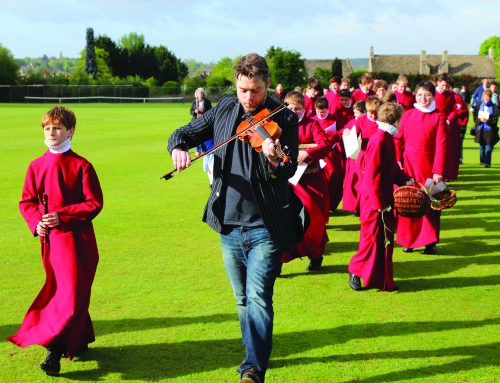
Stephanie Jenkins set up her treasure trove of a website oxfordhistory.org.uk more than twenty years ago. It is spectacularly detailed, authoritative, and compendious – bursting with local riches. Her transcription of plaques, monuments, war memorials, documents, and signs of all kinds, is, quite simply, remarkable.
Surpassing even her assiduous commitment to detail and accuracy, what we admire most are Stephanie’s powers of perception. For it’s one thing to look, quite another to ‘see’.
‘I like showing people things they might have walked past hundreds of times but never noticed,’ she says. ‘Oxford is full of strange and interesting curiosities, so many of them hidden in plain sight.’
Here are half a dozen of the things to which Stephanie has drawn our attention over the years. As you’ll soon discover, there are many, many more.
The Peace Stone hiding in Plain sight
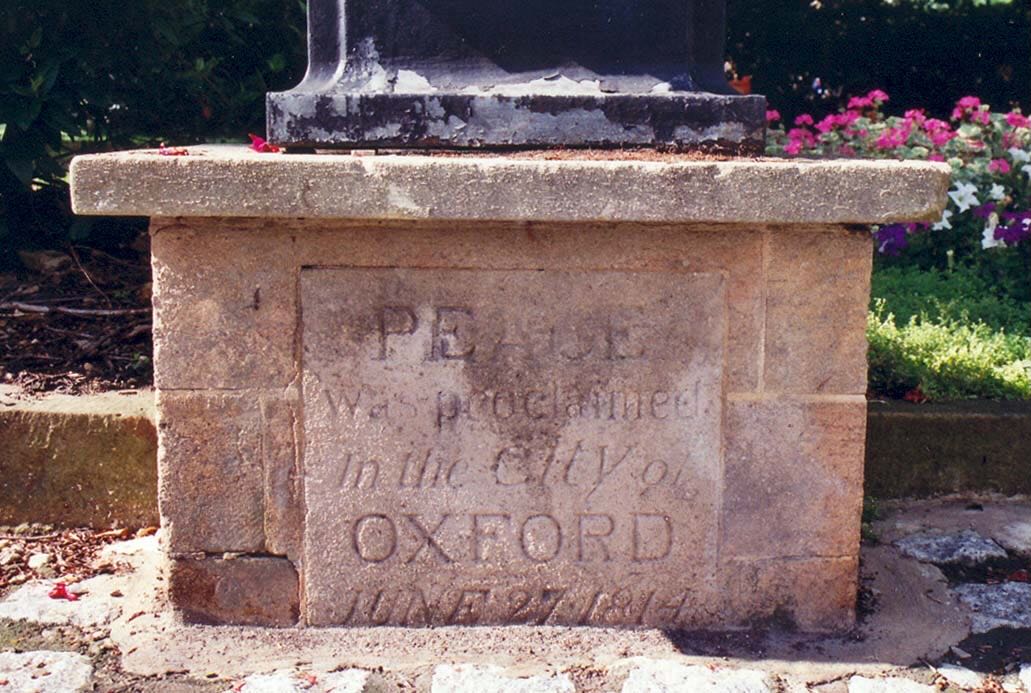
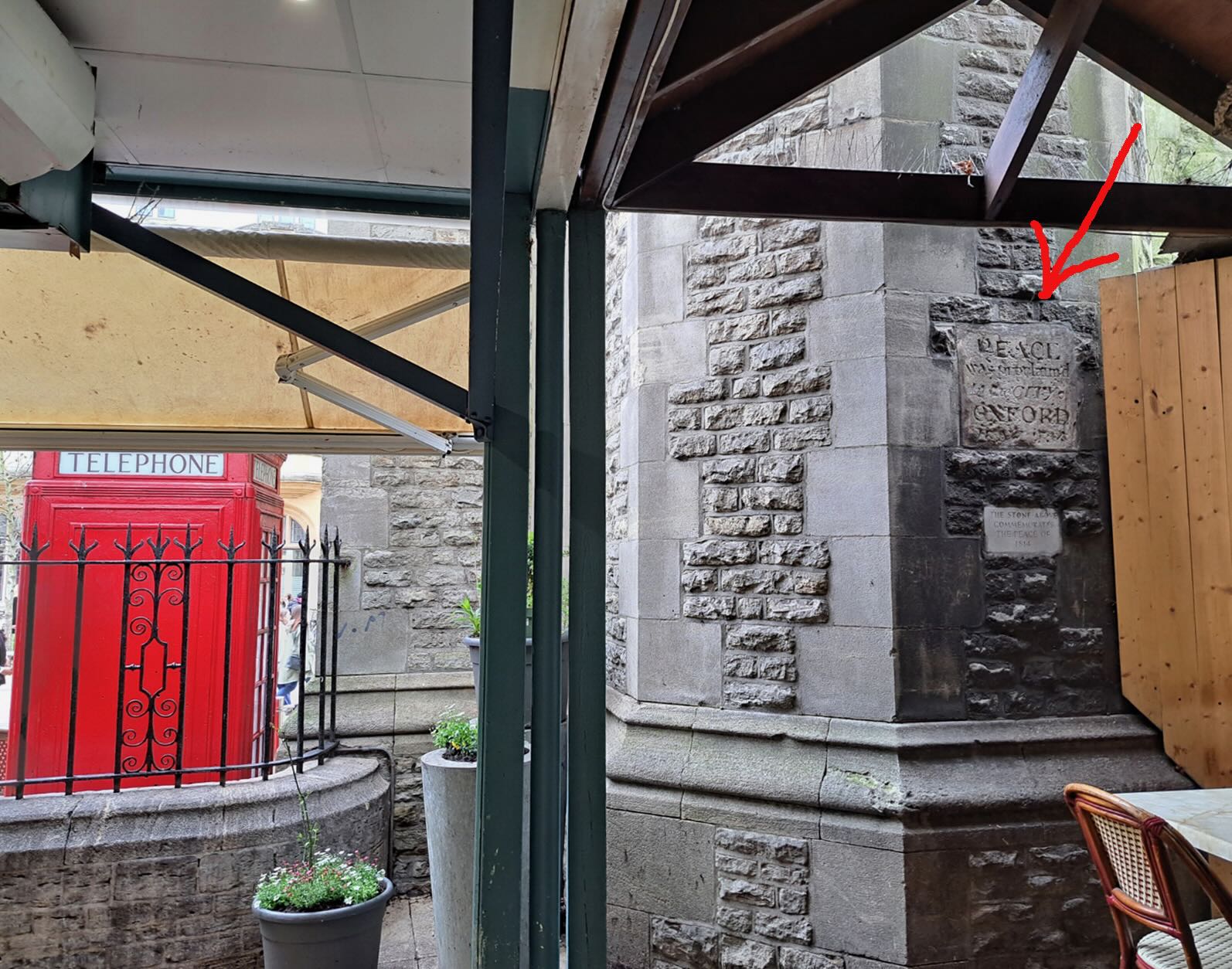
Everyone travelling eastwards via the Plain roundabout passes this peace stone, but most people (if they notice it at all) probably assume that it is just the base of a lamppost. It reads ‘PEACE was proclaimed in the City of OXFORD JUNE 27 1814’, and is one of two Grade II listed peace stones put up in Oxford to commemorate the signing of the Treaty of Paris on 30 May 1814. (The other one is at ground level on the north side of Carfax Tower and is much safer to visit.)
For more information see: https://www.oxfordhistory.org.uk/streets/inscriptions/east/peace.html
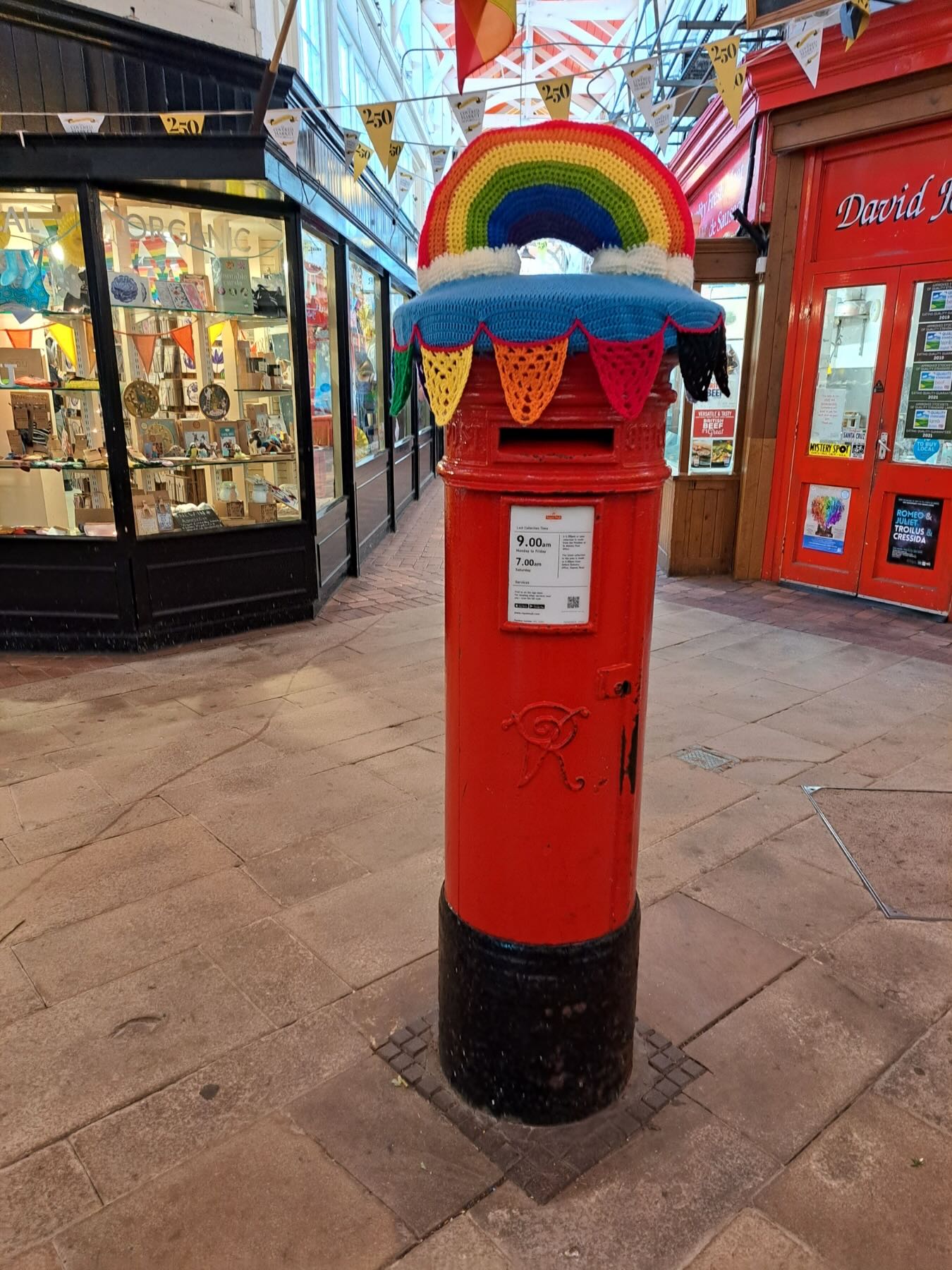
The Pillar Box in the Covered Market
This slimline version of the new-style Victorian pillar box that was introduced in 1889 can be found inside Oxford Covered Market. In 1899 there were 98 separate businesses in the market that would have used this box. It was emptied nine times a day, with the last collection at 8pm.
For all the surviving Victorian pillar boxes in Oxford, see: https://www.oxfordhistory.org.uk/streets/post_boxes/victorian/pillar_boxes.html
The ‘Toxic’ Grave in Holywell Cemetery
This is the grave in Holywell Cemetery of Robert James Wilson, Warden of Keble College, who died on 15 May 1897. The startlingly white section in the middle looks brand new because the circular lead plaque it bears is so poisonous that even after 128 years it continues to contaminate the rainwater that washes down each side, keeping that section of the vault spotlessly clean and free from moss and lichen.
For more interesting graves in Holywell Cemetery, see: https://www.oxfordhistory.org.uk/holywell/misc/holywell_cemetery_interesting.html

The Mystery of the Missing Numbers
If you look closely at this photograph of Shepherd & Woodward, you can see that the unit on the left is numbered 109, the one in the middle 110, and the one on the right 113. So what happened to Nos. 111 and 112 High Street?
The answer is that when Oriel College created King Edward Street as a brand-new road in 1873, it demolished the original shops numbered 109 & 110 to allow access from the High. It would have seemed logical to omit those numbers and leave the two rebuilt shops to the west of the new street with their original numbers of 111 & 112, but instead those shops were allocated the two obliterated numbers, leading to the impossibility of No.110 being attached to No.113.
For more on King Edward Street, see: https://www.oxfordhistory.org.uk/high/tour/south/kingedward_street.html

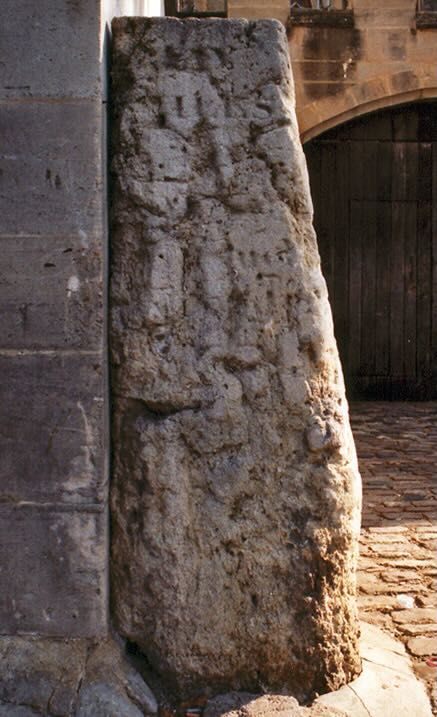
The Chancellor’s Milestone
The inscription on this stone at the east end of Magdalen College is almost illegible today, but if you look closely you’ll see that it says ‘LIV MILES’ at the top. From 1767 turnpike trusts were obliged to measure their roads and erect a marker at each mile. This one is the Chancellor’s Milestone, which is at the pre-1835 boundary of the city and indicates that London is 54 miles away. It is in the middle of a complete run of thirteen surviving milestones between Wheatley and Begbroke on the London–Oxford–Worcester turnpike.
These stones date from the 1770s and can all be seen here: https://www.oxfordhistory.org.uk/streets/wayside_stones/milestones/london_worcester/
The Dog-eared Book
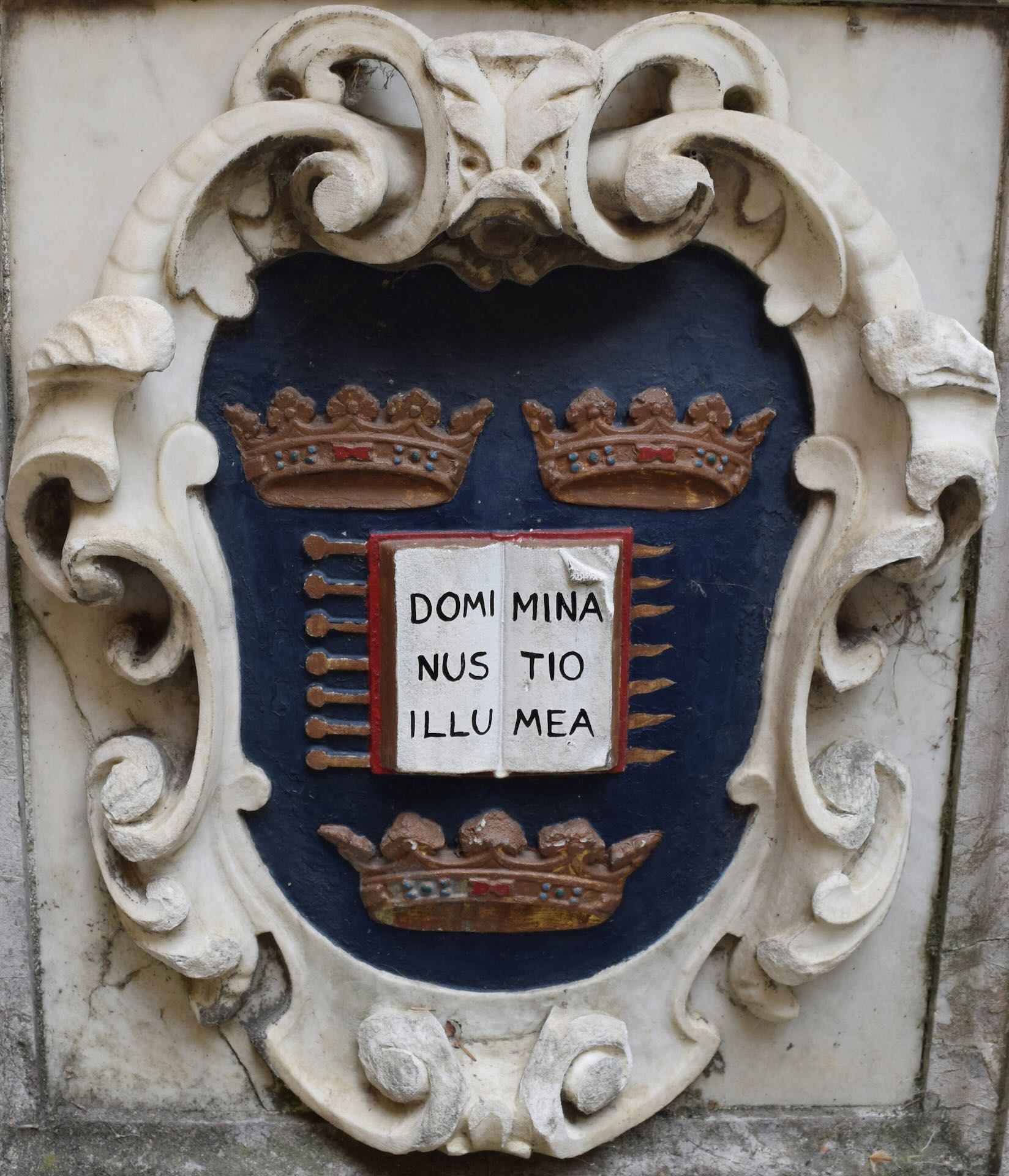
Since c.1400 the arms of the University of Oxford have had as their central feature an open book with leather straps fixed to one cover and studs to the other. The opening words of Psalm 27 (‘DOMINUS ILLUMINATIO MEA’ or ‘The Lord is my light’) first appeared on this book in the second half of the sixteenth century.
These arms can be seen everywhere in Oxford, from lampposts to the war memorial in St Giles’. But this version, which is on the base of a well-known Oxford statue, is unique. If you look closely you will see that the top corner of the page on the right has been turned down. The statue stands in the last place in the world you’d expect to find a dog-eared book celebrated.
To find out more see: https://www.oxfordhistory.org.uk/streets/inscriptions/central/bodleian_library.html
All hail to Stephanie! Long may we see what she sees. Long may we learn to notice.

Feedback
Julie Summers writes:
When we moved to Oxford 25 years ago I promised myself it was such a privilege to live here that I would never walk or cycle into town without spotting one new detail. Sometimes it’s a gargoyle or a lead pipe, at others it’s a window mullion or a hidden doorway. There is rarely an occasion when I don’t see something new. Yet I had not seen half of these fabulous things that Stephanie has collected over the years. All hail to her, as you say.