The sculptor Michael Black (1928-2019) is best known for carving the giant ‘Emperors’ heads which stare out across Broad Street from in front of the Sheldonian Theatre. He did many other fine sculptures too – in a variety of materials: wood, metal, and above all stone.
But what he really wanted to make was an ornamental ox.

It never saw the light of day – in bronze at least – because sufficient funds couldn’t be raised to have it cast. Undaunted, Michael decided to put the wood and plaster-of-paris maquette to good use. And what better purpose than to celebrate May Day?
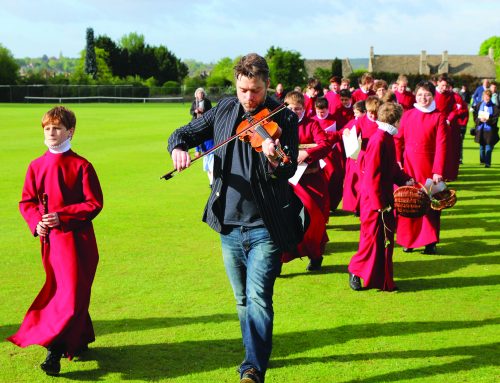
So he fixed wheels to it. For many years, at dawn, you could hear the sound of The Ox trundling from his home in Chalfont Road, down Polstead Road towards Aristotle Bridge. Local children with garlands in their hair would serenade it past The Anchor Inn and onto Port Meadow.


There, from somewhere inside The Ox (as it seemed), home-made beer and elderflower wine would miraculously appear, to be dispensed for the refreshment of their bleary-eyed parents.
Meanwhile, outside The Anchor, Morris sides would assemble in all their finery. A May Queen would ascend the back of the mighty beast. The doors of the pub would be flung open. And a group of The Trap Grounds devotees would set off across Aristotle Bridge to savour the early morning bird song.

Michael died in 2019. The following year Covid struck. The Anchor went under new management (yet again). And The Ox, for reasons which are still somewhat shrouded in mystery, ended up in a barn in Eynsham.
Then, one day, as if by magic, it reappeared – as the centrepiece of an exhibition in Woodstock Museum, celebrating Michael‘s life and work. It was a superb show which brought out vividly the range and diversity of his art. But when the exhibition came down, where was its star attraction to go? The Ox needed a permanent abode, a final resting place.

Enter Tiffany Black, Michael’s daughter, and an artist of distinction in her own right. The shed in her garden in East Oxford wasn’t big enough to accommodate such a sizeable creature; and she felt strongly that her father’s legacy should be available to all the people of Oxford.
So she removed it from its wheeled platform. And then she removed its body. We received this explanatory note:
It’s been an extraordinary two days, from which I am only just recovering. Redbridge has never seen anything like the Ox carcass tumbling out of the van! … A hacksaw was the only way forward in rather cold temperatures. All is finally done and dusted and it will no doubt be a good thing to have the head (which still looks mighty enough – and rather Guernica’ish) as part of Oxford culture into the future.
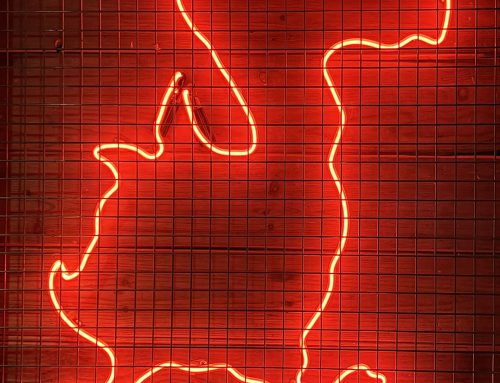
So – what remains is The Ox’s head. A handsome thing it is too. Moreover it is (just about) light enough to be portable and compact enough to be displayed properly. Tiffany even found a loving home for it – in the Museum Resources Centre near Standlake.


Let’s hope our beloved bovine makes a re-appearance next year so we can once again celebrate its presence on our streets. For Michael Black’s Ox has become a symbol not just of Oxford but of Beltane playfulness and regeneration – a joyous reminder of these heady days of May, when the buds are darling and summer is a comin’ in.


Feedback
Michael’s obituary in The Times (18 February 2019) was written by journalist and broadcaster Libby Purves. She described him as ‘a powerful figure whitened with stone dust’, who ‘seemed almost as majestic and timeless to us as his creations’ and who ‘dispensed home-brewed beer and yarns about the city, whose stones he loved and tended’ …
‘He demonstrated the tough physicality of turning vision into reality. In our time of increasingly conceptual art works, made in secondary workshops on the say-so of a highly rewarded inventor, too many disregard the ancient craft skills. I watched his perfectionism, the maker’s urge to force form and line to mean something beyond the visible, and the impetus that could never stop creating, whether in tiny quirks or great enterprises, yet needed commissions to live.
‘He lived as few – even artists – do now: insouciant of fame, fashion, or the favour of gallerists. With energy drawn from woods and quarries and history, he wrestled beauty from hard surfaces. Our bland and cautious times could not degrade him. Such men are long remembered.’

We asked Tiffany Black if she had any photographs. WARNING: Viewers of a timid disposition may wish to look away.


Martin Brodetsky, historian of Oxford United, writes:
The ox-head that features on United’s badge was originally designed by the famous TV anthropologist, Desmond Morris (1928-2026) who was also a lover of football, a director of our club, and a prolific artist. In coming up with the design, he explained:
‘I replaced the old bull with a simple, powerful bull’s head with a fiercely determined expression as if he was charging straight at you. The simplicity of the design meant that, not only could it easily be copied by fans, but it also showed up clearly at a distance, even when worn as a badge on the player’s kit. Other clubs often have badges which are so complicated that you have to be very close to them to see the details and I wanted to avoid that.’
Apparently, the inspiration for his design was the ox-head of ancient Minoa. His suggestion was adopted with enthusiasm, and has been used on shirts from 1979 to the present day, with a variety of wording and surrounding crests.

Diana Naumann asks:
When and where do you meet someone with whom you then spend the rest of your life? At Michael’s magical 1989 May Morning at 6.30am, of course, while waiting at The Anchor bar to order a bacon sarnie and a pint of cider!
37 years to the May Day later: Diana with Tony Thomson, outside the Rose & Crown.

Talking of sartorial couples …